Why Audley End Gardens Are Worth Visiting
Managed by English Heritage, Audley End House and Gardens is one of Essex’s finest historic attractions.
Information to visit click here .Audley End House and Gardens
In July, just before the summer holidays, we visited the Audley End Gardens. On a previous visit, we had explored Audley End House, and this time we were hoping to see the stables. Unfortunately, they were closed to the public that day. As we were leaving the stables museum, however, we were lucky enough to see a pair of horses being led across the grounds.
We then walked to the gardens, and I honestly wasn’t expecting such an amazing experience. They were unlike any other gardens we have visited. Not only are they beautifully designed, but what impressed me most was their incredible diversity. You can find ingredients for recipes, herbs for teas, and plants traditionally used as home remedies—all growing together in one remarkable garden. This is how Victorian houses used to design their gardens, combining beauty with practicality so that every area served a purpose.
Long before supermarkets, next-day delivery and imported fruit filled our shelves, every great country house relied on one essential part of the estate. Not the grand entrance, not the flower gardens… it was The kitchen garden, I can add is definitely my dream Kitchen Garden.


Hidden behind protective walls and carefully organised into productive plots, these gardens worked quietly behind the scenes, providing the fresh ingredients that appeared on dining tables every single day.Today, they’re often admired for their neat rows and heritage charm. But originally, they were places of industry rather than leisure.

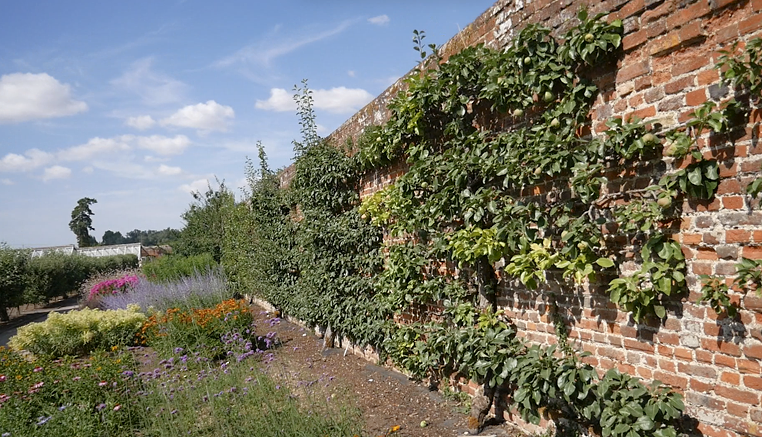
Fruit trees were trained against warm brick walls to ripen peaches, apricots, apples and pears in the unpredictable British climate. Herbs were grown for cooking and medicine.
In this photograph: apple trees
Vegetables followed carefully planned rotations that kept the soil healthy and productive. Waste was rare. Seasonality wasn’t a fashionable idea—it was simply life.

The phrase “kitchen garden” barely hints at what these spaces once produced.


Flowers were cultivated not only for beauty but also to decorate dining tables and flavour desserts.
Glass house was another method used at the Victorian Audley End House in a very peculiar intelligent way. This is what we saw getting closer, but this is not a common glass house, they created an area destinated for a Vineyard.

As the plan shows there are different sections, areas or rooms, each designed intentionally to vastly use. The picture bellow.


The vineyard growing grapes, Victorian really thought in every detail and amazingly count with a Boiler control.


Growing tomotoes could not be missed

More tasty tomatoes!

Another section of the house glass use walls for growing peaches


Boiler


A space to dry herbs and store garden tools. In Victorian times dried herbs and flower were used for home remedies, for cooking, teas, etc


What we can learn
You don’t need a big piece of land to get your kitchen garden. Even walls or pots are great to grow fruit, herbs or vegetables. Planning harvests around the seasons instead of expecting the same crops all year.Victorian gardeners didn’t expect perfection in every season. Instead, they embraced change. Mix flowers among vegetables to attract pollinators.


Gardens were not only to impress, although served as symbols of beauty, power, and social status.
Audley End House and Kitchen Garden left a big impression on me. I’m sure we’ll be coming back in the autumn to see the seasonal changes and this time hopefully also there will be opportunity to visit the stables, my son loves horses!. I haven’t even mentioned the huge gardens surrounding the house, which truly deserve to be explored in their own right.
If you are interested to visit click the link for more information Audley End House and Gardens
As an important note English Heritage membership offers unlimited visits to hundreds of historic places across the country. I totally recommend it.


